SCIENCE & COACHING PRACTICE
AI beat personal trainers. What did the study actually show?
A scientific study published in 2026 compared the quality of answers given by qualified personal trainers and ChatGPT 3.5 to common questions about exercise training.
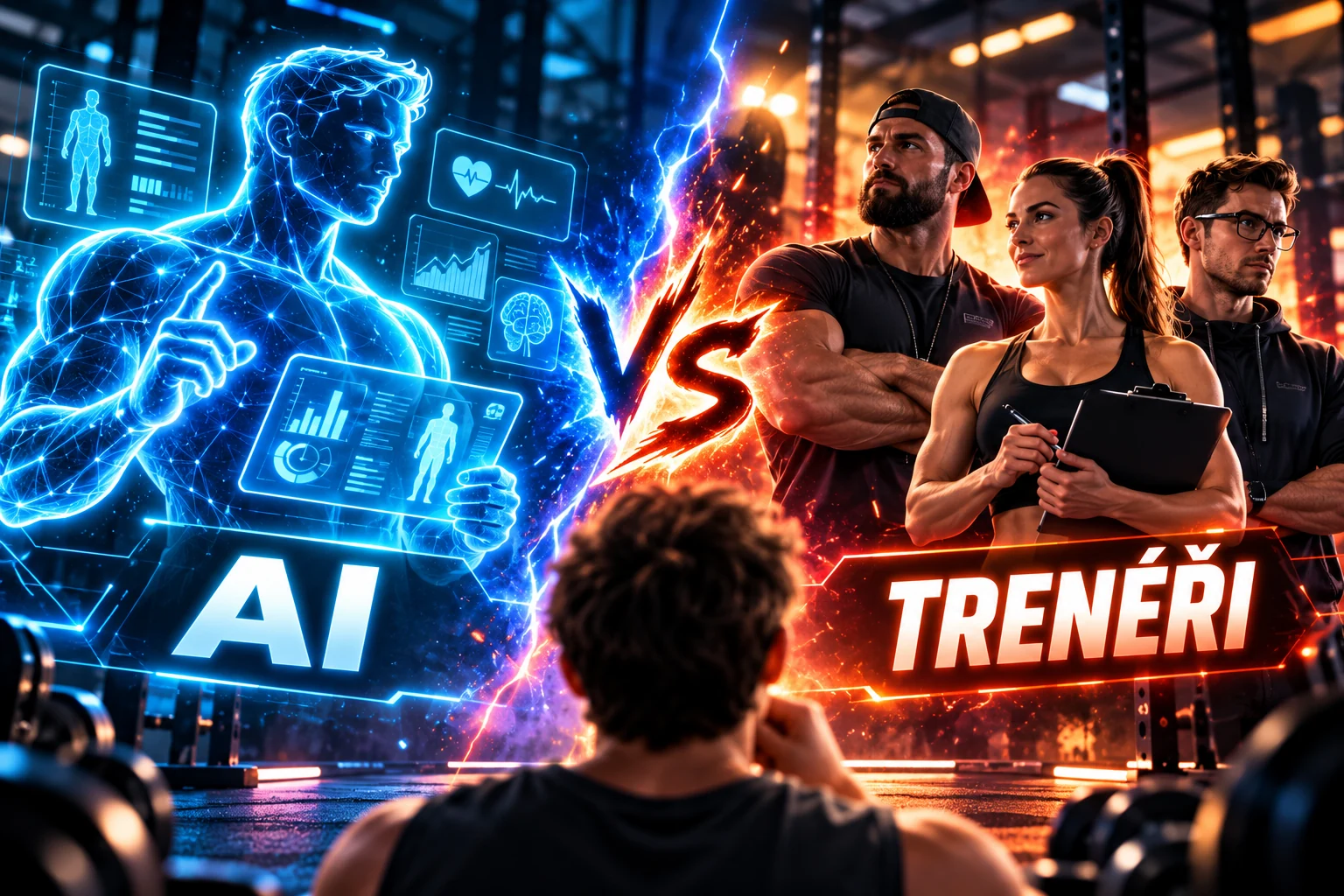
The result? ChatGPT received statistically significantly higher overall ratings for 6 of the 9 questions. The personal trainers did not score statistically significantly higher on any question. Does that mean AI can replace a personal trainer?
How was the study conducted?
9 qualified personal trainers answered 9 common exercise questions. The same questions were put to ChatGPT 3.5.
The answers were assessed by 27 reviewers: 18 personal trainers and 9 scientific experts. The reviewers did not know who had written each answer. They assessed scientific accuracy, clarity and practical usefulness.
What were the results?
Where did ChatGPT outperform the trainers?
- Overall rating6 of 9 questions
- Scientific accuracy5 of 9 questions
- Clarity6 of 9 questions
- Practical usefulness5 of 9 questions
Does that make AI a better coach?
No. The study assessed the quality of theoretical answers, not the actual coaching of clients.
It did not investigate long-term training outcomes, individualisation, communication or a coach’s ability to respond to a client’s changing needs.
The sample was small: just 9 questions, 5 of which concerned weight loss or fat reduction. ChatGPT’s answers were also longer on average than the trainers’ answers, which may have influenced the ratings.
The findings are interesting, but they do not show that AI outperforms coaches in every aspect of their work.
My perspective
Knowing the information may no longer be enough to give a coach a competitive advantage. AI can quickly explain training principles, process information and suggest recommendations.
A good coach’s value also lies in critically evaluating that information, adapting it to the individual, responding to their feedback and guiding them over time.
That does not mean AI cannot individualise recommendations. This study did not investigate its ability to provide comprehensive coaching. I therefore see AI primarily as a useful tool for coaches, rather than an automatic replacement for their work.
| What AI can offer | What a good coach’s work brings |
|---|---|
| Explanations of training principles | Judging their suitability for the client |
| Suggested training programmes | Putting them into practice and adjusting them over time |
| Processing training data | Interpreting it in the context of an individual athlete |
| Information and recommendations | Personal communication, guidance and feedback |
The capabilities of AI and coaches can overlap. This table illustrates different ways they can be used, rather than abilities exclusive to people or technology.
Conclusion
Artificial intelligence could bring significant changes to the coaching profession.
“The future will not belong to coaches who merely pass on information, but to those who can apply it appropriately to the individual in front of them.”
Scientific reference
D’hoe, B., Kirk, D., Boone, J., & Colosio, A. (2026). ChatGPT Outperforms Personal Trainers in Answering Common Exercise Training Questions. Journal of Sports Science and Medicine, 25(1), 235–261.
Radek Rosa
Strength and conditioning coach and educator. He works with athletes and the general population and provides education for coaches and physiotherapists.
More about Radek →Looking for a coach you will connect with?
Explore personal training or online coaching to see what working together could look like.